Showing posts with label ABC News. Show all posts

Friday, April 16, 2010

C-Y-A Doesn’t Work in a Crisis


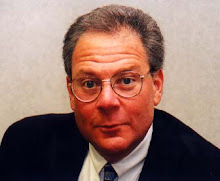
USA Swimming Executive Director Chuck Wielgus


By Eric Seidel, CEO

The Media Trainers®

USA Swimming is where future American Olympians are groomed. It also is where some young girls have been sexually abused for years by several dozen coaches.

The executive director of USA Swimming gets an “F” for how he’s handled this crisis, especially through the news media. Instead of displaying outrage and a sense of urgency to address and eradicate this situation, he chooses to minimize, deflect and, in short, practice C-Y-A.

At least 36 USA Swimming coaches have been accused of sexual abuse involving young female swimmers. In one case, when discovered, a coach simply packed up and headed for another town and began coaching teenaged girls again.

In an ABC News 20/20 interview, USA Swimming’s Executive Director Chuck Wielgus claimed: "It's not nearly as serious in USA Swimming as it might be in the rest of society…" “…I don't want to be the one to sit here and say 36 is not too many, one is too many, but this is not just a problem that's isolated to one sport."

Sadly, this is like a child trying to minimize and deflect bad behavior by saying “they did it, too, and even more than we did "(quotes added). Wielgus resorts to similar spin on the organization’s Web site.

Time and again, organizations and executives fail to learn from the mistakes of others in handling crisis communications. Based on the 20/20 story, USA Swimming’s Wielgus failed both in how the organization has reacted internally and externally to this crisis by portraying a genuine concern and a desire to quickly correct a situation so damaging to the young women involved as well as his group.

Those who support USA Swimming need to take a very close look at its leadership. Dramatic changes appear to be in order.

Saturday, November 21, 2009

Of Mammograms and Double-Speak


The Critical Importance of Message Development

By Eric Seidel, CEO
The Media Trainers®


The most egregious mistake made by the U.S. Preventive Services Task Force before releasing its recent report on mammograms was either the failure to prepare a comprehensive and understandable communications plan, or believing what sounded like double-speak to lay people and even other doctors would be quite clear. Also, you have to wonder if the task force failed to anticipate the controversy it would be igniting.

Its spokespersons have served only to confuse and contribute to women’s concerns.

I’ve embedded several pieces of video in this post, making it longer than most. But if you’re looking to make a case for thorough message preparation and practice, then please take the time to watch each of them. And feel free to share this post with others.

What I've gleaned from the stories I've seen and read, the report's conclusion is that women under 50 should consult their physicians and then decide for themselves about the need and frequency for mammograms. I’m not interested in arguing the wisdom of that; I’m not a doctor.

The task force’s report has incited concern, anger, debate and vociferous disagreement, all fueled by a flurry of ambiguous and confusing statements and interviews. Their repeated missteps have managed to keep the story alive for a number of news cycles.

CNN American Morning co-anchor Kiran Chetry interviewed a breast cancer survivor who is well under 50 and, fortunately, discovered a tumor, thanks to routine testing. Then, Chetry turned to task force member Dr. Lucy Marion, Ph.D., RN and dean of the School of Nursing at the Medical College of Georgia (click on video).


CNN’s resident medical expert, Dr. Sonjay Gupta, participated in the interview and, as he listened, you could see the concern—if not anger—tighten his facial expressions. He questioned Marion--quite legitimately--from a doctor’s perspective on how to advise patients (click on video).


As confusion mounted, anchor Chetry asked Dr. Marion about the possibility of the task force reconsidering its recommendations (click on video).


The live interview ended there. But Gupta’s concerns did not. He continued interviewing Lucy Marion off-air and then played it back later in the morning, wondering how the task force's value of a human life came into play (click on video).


Meanwhile, ABC’s John McKenzie interviewed another U.S. Preventive Services Task Force member, Dr. Timothy Wilt. The result was only slightly better (click on video).


Like CNN’s Chetry, McKenzie asked Wilt if the task force might reconsider (click on video).


Yet a third task force member did tell correspondent McKenzie that she is consulting with fellow members on ways to clarify their message.

There’s an old saying, “Better late than never.” But you have to wonder if, in this case, it’s too late, that too much damage has been done by the task force because of its inability to deliver a clear and compassionate message.

Also the body language of Drs. Marion and Wilt did nothing to help them. Their wandering eyes and, in Marion’s case occasionally closing her eyes for a protracted period of time, detracted from their credibility and made me wonder if even they believe in the conclusions of the task force. Clearly, neither one seemed very comfortable with the messages.

Sunday, January 11, 2009

A Politician Who's Not Evasive?


Politicians typically are horrible role models for learning how to interact with news media interviewers. They’re notorious for their propensity to ignore questions and spew the rehearsed “company” line. They usually are much better to use as examples of evasion.

Just think back to the recent and very protracted presidential campaign. Candidates and their surrogates ignored most questions and regurgitated their slogans and memorized lines. It was maddening. What they don’t seem to understand is that evasion is a distraction, and the messages they’re trying to force-feed us really aren’t being heard.

And so, it’s almost counter-intuitive to offer a politician as an example of someone who has managed to be fairly responsive to questions while staying on message. This is not about a politician and his position on issues. Instead, it reinforces the notion of your right to be responsive to questions on your terms, from your perspective, and still effectively connect with target audiences.

President-elect Barack Obama submitted to an interview Sunday, January 11, 2009, on ABC’s This Week with George Stephanopoulos. With just over a week before taking office and the reality of the issues he faces, Obama was quite refreshing with his responses. Here are some examples that have been copied and, in the interest of time, shortened, but no words have been added or meanings changed:

STEPHANOPOULOS: You know, we asked our viewers what they wanted to hear from you, and we got hundreds of pages of questions, thousands of questions, almost all about the economy. And it's clear there's a lot of pain out there, a lot of fear. And if I could sum up the questions, it would be very simple, can you fix this?
OBAMA: I think we can fix this. But it's going to take some time. It's not going to happen overnight...
STEPHANOPOULOS: Do you really believe those business tax cuts are going to work to create jobs? Or do you put them in so you could get Republican votes?
OBAMA: Well, let's look at the package as a whole, the bulk of the package is direct government spending. And here are a few things we're going to do…
…And so then the question becomes, do tax cuts also provide a stimulus? Do they also help? And they may not help as much as some of the direct spending projects do, but they still provide a stimulus, especially if they are targeted towards people who are really in need.
STEPHANOPOULOS: When you look at the array of things you want to do, as president, something is going to have to give.
OBAMA: Right.
STEPHANOPOULOS: Which of your ambitions, which of your campaign promises will you have to scale back on because of all of this?
OBAMA: Well, we are going to be presenting a budget in February. And as we learned this week, we are inheriting over a trillion dollar deficit. Unheard of in recent history and…So one of the things that I've said is -- and I've said this to my economic team, we are going to have to make some tough choices under my watch to ensure that on the medium term and the long term we're starting to bend the curve where we are getting the deficit under control.
STEPHANOPOULOS: Let me press you on this, at the end of the day, are you really talking about over the course of your presidency some kind of a grand bargain? That you have tax reform, health care reform, entitlement reform, including Social Security and Medicare where everybody in the country is going to have to sacrifice something, accept change for the greater good?
OBAMA: Yes.
STEPHANOPOULOS: And eventually sacrifice from everyone.
OBAMA:
Everybody is going to have to give. Everybody is going to have to have some skin in the game.
STEPHANOPOULOS: So based on what you've learned during all these intelligence briefings, are we safer or more at risk than you believed during the campaign?
OBAMA: Well George you know I can't say what the --
STEPHANOPOULOS: Without giving me any confidential information, just generally.
OBAMA: I think that we have made progress in certain areas but those dangers are still there. And those dangers are not going to immediately go away…
STEPHANOPOULOS: You also agreed on Guantanamo when you say you want to shut it down. You say you're still going to shut it down. Is it turning out to be harder than you expected, will you get that done in the first 100 days?
OBAMA: It is
more difficult than I think a lot of people realize and we are going to get it done but part of the challenge that you have is that you have a bunch of folks that have been detained, many of whom who may be very dangerous who have not been put on trial or have not gone through some adjudication.

Obama either gives direct answers, or backs into an answer. But, there’s no evidence in the above selections that he completely ignores or evades questions. And these examples are indicative of the entire interview. When he cannot, or will not, respond directly, he says so and says why.

It will be interesting to see if he continues this practice during his presidency.